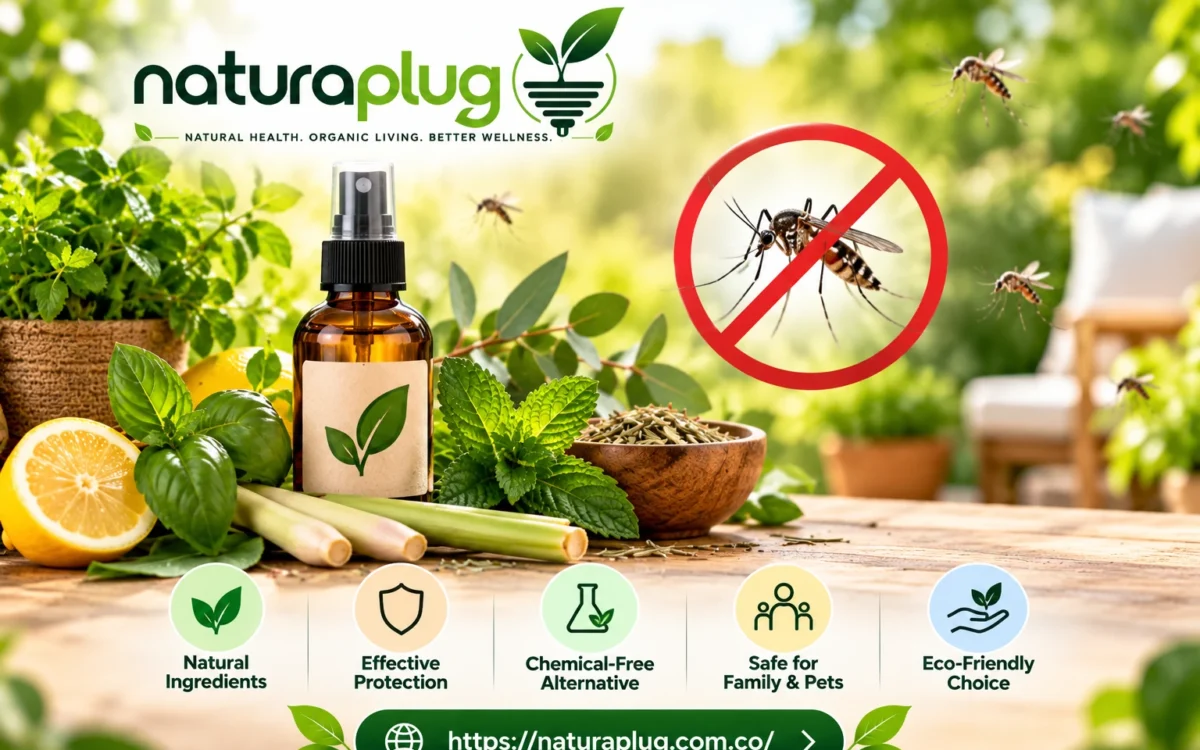

Are plant-based mosquito repellents effective? Yes, some can repel mosquitoes, but their performance varies widely by ingredient, concentration, formulation, mosquito species, and how long the product remains on the skin. Ingredients such as oil of lemon eucalyptus (OLE), PMD, citronella, and certain other plant-derived compounds have shown mosquito-repelling activity. However, a product being labeled “natural” does not automatically mean it provides reliable protection.
At a Glance
- Some plant-derived ingredients can repel mosquitoes effectively.
- Oil of lemon eucalyptus (OLE) and PMD are among the better-supported plant-derived repellent ingredients.
- Citronella and several essential oils may provide protection, but protection time can be shorter or less predictable.
- Pure essential oils should not automatically be treated as equivalent to tested repellent products.
- Product formulation and concentration have a major effect on performance.
- EPA-registered repellents have undergone evaluation for effectiveness when used according to their labels.
- Mosquito protection also involves clothing, screens, mosquito nets, and reducing standing water.
- People in areas where mosquitoes can transmit disease should choose a repellent with reliable evidence rather than relying on an untested “natural” product.
What Are Plant-Based Mosquito Repellents?
Plant-based mosquito repellents are products that use ingredients derived from plants or plant compounds to reduce mosquito attraction or discourage mosquitoes from biting. Common examples include citronella, oil of lemon eucalyptus, PMD, catnip oil, lemongrass, peppermint and other essential oils.
The term “plant-based” covers a broad range of products. A properly formulated repellent containing a plant-derived active ingredient is very different from applying an undiluted essential oil directly to the skin. The formulation, concentration, stability and application method can all affect how well the product works.
The CDC recognizes several plant-derived or plant-associated repellent ingredients, including OLE, PMD and 2-undecanone. EPA also lists ingredients such as citronella and catnip oil among active ingredients used in registered skin-applied insect repellents.
Do Plant-Based Mosquito Repellents Really Work?
Yes, some plant-based repellents can work, but they should not all be treated as equally effective.
Research has found mosquito-repelling activity from several essential oils and plant extracts. A 2026 systematic review covering 33 experimental studies found promising activity from multiple essential oils, although much of the evidence came from controlled laboratory tests rather than real outdoor conditions. The researchers also highlighted differences in mosquito species, concentrations and formulations.
Another systematic review found evidence that several plant-based substances, including citronella and certain plant oils, can provide protection against Anopheles mosquitoes. However, the studies differed considerably in methods and formulations, making direct comparisons difficult.
That is why a bottle labeled “natural mosquito repellent” should not automatically be assumed to provide the same protection as a tested repellent.
Which Plant-Based Ingredients Have Evidence Behind Them?
Oil of Lemon Eucalyptus and PMD
Oil of lemon eucalyptus is one of the better-supported plant-derived mosquito repellent ingredients.
The active compound associated with its mosquito-repelling properties is PMD (para-menthane-3,8-diol). CDC lists OLE and PMD among repellent ingredients that can provide reasonably long-lasting protection when used in appropriate formulated products.
There is an important distinction, though: CDC does not recommend using pure oil of lemon eucalyptus as a repellent because pure essential oil has not gone through the same validated safety and effectiveness testing as registered repellent products.
Citronella
Citronella is one of the most familiar botanical mosquito-repelling ingredients.
Studies have found mosquito-repelling activity from citronella oil, but its protection can be affected by formulation, concentration, evaporation and exposure conditions. CDC notes that botanical repellents can work for shorter periods than some conventional repellents.
Citronella may therefore be useful in certain situations, but relying on an untested formulation for extended outdoor exposure may not provide dependable protection.
Catnip Oil
Catnip oil is another plant-derived ingredient that has been used in mosquito repellent products. EPA lists catnip oil among active ingredients used in registered skin-applied insect repellents.
The fact that an ingredient is registered does not mean every product containing that ingredient provides identical protection. The finished formulation and label directions still matter.
Lemongrass and Other Essential Oils
Lemongrass, peppermint, rosemary, lavender and several other essential oils have been investigated for mosquito repellency.
A 2022 laboratory study tested several essential oils against Aedes aegypti, Anopheles dirus and Culex quinquefasciatus. The results showed repellency, but protection times varied considerably between oils and mosquito species.
This is one reason laboratory results should not be interpreted as proof that any essential oil will provide dependable protection during every outdoor situation.
Plant-Based vs Conventional Mosquito Repellents
The main difference is not simply “natural versus chemical.” It is how consistently the finished product has been tested and how long it provides protection.
| Factor | Plant-Based Repellent | Conventional Repellent |
|---|---|---|
| Active ingredients | May include OLE, PMD, citronella or other botanicals | Often DEET or picaridin |
| Effectiveness | Varies considerably | Often more predictable |
| Protection duration | Depends heavily on ingredient and formulation | Often longer-lasting |
| Product variation | Can be substantial | Also varies by concentration and formulation |
| Research | Some ingredients have strong evidence, others less | Strong evidence for several common ingredients |
| “Natural” label | Does not guarantee effectiveness | Registration provides useful evidence |
| Best use | Depends on product and exposure | Useful where dependable protection is needed |
A 2026 systematic review of human studies found that synthetic repellents, particularly DEET-based products, generally provided longer complete protection times than natural essential-oil repellents. Natural products often provided shorter protection, although formulation technologies improved performance in some cases.
Why Does Protection Time Vary?
A repellent that works well in a laboratory may perform differently outdoors.
Several factors can affect protection:
- Sweat and physical activity
- Rain or swimming
- High temperatures
- How much product is applied
- How often it is reapplied
- The formulation of the product
- The mosquito species present
- Whether clothing rubs the product away
- The concentration of the active ingredient
EPA also explains that physical activity, perspiration, water exposure, temperature and individual differences can affect repellent performance. Following the product label is therefore important.
Are Pure Essential Oils Better?
Not necessarily.
A common assumption is that a concentrated essential oil must provide stronger protection. That is not a reliable rule.
Pure essential oils can differ from tested repellent formulations in concentration, stability, skin compatibility and duration of protection. CDC specifically advises against treating pure oil of lemon eucalyptus as equivalent to a tested OLE/PMD repellent.
Essential oils can also cause skin irritation or allergic reactions in some people. A product formulated and labeled for use as an insect repellent provides clearer directions for application and safety.
How to Choose a Plant-Based Mosquito Repellent
A few label checks can make the choice easier.
1. Check the active ingredient
Look for a clearly identified active ingredient rather than relying only on words such as “natural,” “herbal” or “botanical.”
2. Check the product registration
For products sold in the United States, an EPA registration number indicates that EPA has received technical information about the product’s effectiveness. CDC recommends EPA-registered repellents for protection from mosquito bites.
For products sold in other countries, consumers should check the relevant national regulatory authority.
3. Read the protection instructions
The label should explain how to apply the product and when it needs to be reapplied.
4. Consider the exposure
A short evening outdoors is different from spending several hours in an area with heavy mosquito activity.
For situations where mosquito-borne illness is a concern, dependable protection deserves greater priority than simply choosing a product because it is labeled natural.
Can Plant-Based Repellents Prevent Mosquito-Borne Diseases?
Mosquito repellents help reduce bites, which can reduce exposure to mosquito-borne infections. However, no repellent should be treated as a complete mosquito-control strategy.
The CDC recommends combining repellent use with measures such as wearing clothing that covers exposed skin, using window and door screens, using mosquito netting where appropriate, and removing standing water where mosquitoes can breed.
This matters because mosquito exposure can happen at home, outdoors, while traveling or during different times of the day depending on the mosquito species.
What About Children?
Children need extra care with mosquito repellents.
CDC advises following product label directions and says products containing OLE or PMD should not be used on children younger than 3 years. Repellent should also not be applied to a child’s hands, eyes, mouth, cuts or irritated skin.
Parents and guardians should check the product label for age restrictions before use. For younger children, physical barriers such as clothing and properly fitted mosquito netting can also provide useful protection.
Common Mistakes With Natural Mosquito Repellents
Assuming natural means effective
An ingredient can come from a plant and still provide limited or inconsistent mosquito protection.
Using an untested DIY mixture
A homemade mixture may have an unknown concentration and unknown protection time. It may also cause skin irritation.
Applying essential oils directly without checking safety
Essential oils are concentrated substances. Skin reactions can occur, and safety depends on the particular ingredient and formulation.
Forgetting to reapply
Protection can decrease with sweat, water exposure and time. The product label should determine the appropriate reapplication schedule.
Relying on repellent alone
Screens, protective clothing, mosquito nets and reducing standing water can add important layers of protection.
Are Plant-Based Mosquito Repellents Safe?
Safety depends on the active ingredient, concentration, formulation and how the product is used.
“Natural” does not automatically mean risk-free. Plant-derived substances can still irritate the skin or cause allergic reactions.
A registered product with clear directions provides a better basis for safe use than an untested mixture. The product label should always be followed, especially for children.
For someone with sensitive skin, allergies or another health concern, a healthcare professional can help determine which type of repellent is appropriate.
Frequently Asked Questions
Are plant-based mosquito repellents effective?
Some are. OLE, PMD, citronella and other plant-derived ingredients have demonstrated mosquito-repelling activity, but effectiveness varies by formulation, concentration, mosquito species and exposure conditions.
What is the most effective natural mosquito repellent?
There is no single natural ingredient that works best in every situation. OLE and PMD have relatively strong support among plant-derived options, but consumers should choose a properly formulated, registered product rather than relying on pure essential oil.
Does citronella really repel mosquitoes?
Yes, citronella can repel mosquitoes. However, protection may be shorter or less consistent than with some conventional repellents, and performance depends on the formulation.
Is oil of lemon eucalyptus the same as lemon eucalyptus essential oil?
They are related but should not automatically be treated as the same repellent product. CDC distinguishes EPA-registered OLE/PMD formulations from pure oil of lemon eucalyptus, which has not undergone the same validated testing for safety and effectiveness.
Are essential oils effective against mosquitoes?
Some essential oils show mosquito-repelling activity in laboratory research. However, protection varies considerably, and laboratory performance does not always predict outdoor effectiveness.
Can plant-based repellents be used every day?
A properly labeled repellent can generally be used according to its directions. The label should be followed for application, reapplication and age restrictions.
Are natural mosquito repellents safe for children?
Some products can be used by children, but age restrictions vary. CDC advises against products containing OLE or PMD for children younger than 3 years. Parents and guardians should always check the product label before use.
Internal Linking Suggestions for NaturaPlug
These articles would fit naturally into the NaturaPlug content structure:
- Natural Mosquito Repellents: What Actually Works? — link from the introduction.
- Plant-Based Ingredients and Their Benefits — link from the plant-derived ingredients section.
- Essential Oils: Uses, Benefits and Safety — link from the essential-oil discussion.
- Natural Ways to Keep Mosquitoes Away — link from the prevention section.
- Citronella Oil Benefits and Uses — link from the citronella section.
- Oil of Lemon Eucalyptus for Mosquitoes — link from the OLE section.
- Natural Insect Repellent Safety Guide — link from the safety section.
Final Takeaway
Plant-based mosquito repellents can be effective, but effectiveness depends heavily on the ingredient, concentration, formulation and conditions of use. Research supports several plant-derived ingredients, while newer reviews also show that many essential-oil studies have been performed under controlled laboratory conditions rather than typical outdoor settings.
For people who prefer a plant-derived option, a properly formulated and appropriately registered product is a better choice than assuming any essential oil will provide reliable protection. OLE and PMD have particularly useful evidence behind them, while citronella and other botanical ingredients can provide protection but may have shorter or less predictable effects.
Mosquito protection works best as a broader strategy that can include repellent, appropriate clothing, screens, mosquito netting and reducing standing water around the home.
Disclaimer
This article is provided by NaturaPlug for general educational purposes and does not replace medical or professional advice. Mosquito repellents should always be used according to their product labels. People with allergies, sensitive skin or other health concerns should seek advice from a qualified healthcare professional. For areas where mosquito-borne diseases are present, readers should follow guidance from local public health authorities.