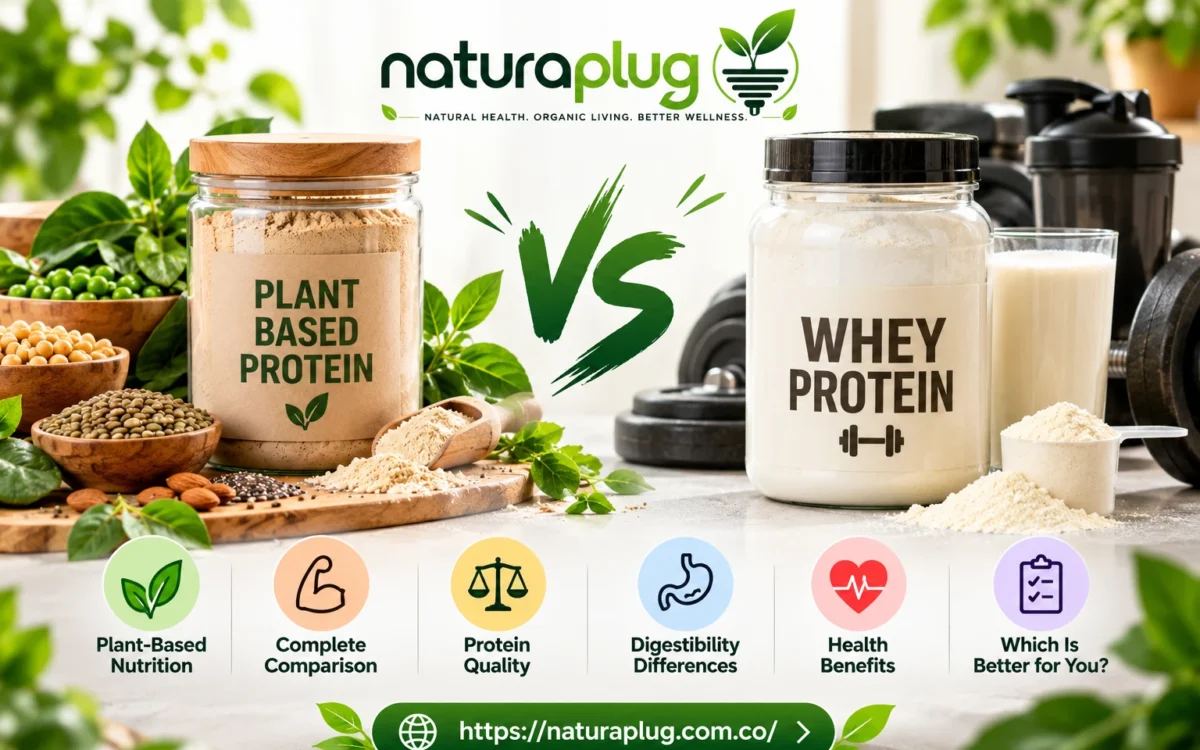

Plant based protein vs whey is a common comparison for people looking for a convenient way to increase protein intake. Whey has a strong research base and is naturally rich in essential amino acids, including leucine, while plant proteins vary by source and are sometimes lower in certain essential amino acids. However, recent research suggests that well-formulated plant protein blends can support muscle protein synthesis similarly to whey, particularly when enough total protein is consumed.
At a Glance
- Whey is a dairy-derived complete protein with a strong amino acid profile.
- Plant protein powders may be made from peas, soy, rice, hemp or blends.
- Whey generally provides more leucine per gram than many individual plant proteins.
- Some plant protein blends can produce muscle protein synthesis responses comparable with whey.
- Plant protein can be useful for people who avoid dairy or prefer plant-based foods.
- Whey may be convenient for people who tolerate dairy and want a protein source with extensive research behind it.
- Neither option is automatically better for every person.
- Regular meals should remain the foundation of protein intake, especially for teenagers.
What Is Whey Protein?
Whey protein comes from milk. During cheese production, the liquid portion of milk is separated and processed to create whey protein powder.
Two common forms are whey concentrate and whey isolate. Concentrate generally retains more of the components found naturally in milk, while isolate undergoes additional processing to increase the protein concentration and reduce much of the lactose and fat.
Whey contains all nine essential amino acids, including leucine. Leucine plays an important role in signaling muscle protein synthesis, which is one reason whey has been studied extensively in sports nutrition.
Whey is also generally easy to mix into drinks and foods. However, it is still a dairy-derived product, so it may not suit people with a milk allergy, people who avoid dairy, or those following a vegan diet.
What Is Plant-Based Protein?
Plant-based protein powder is made from plant sources such as peas, soy, rice, hemp and other crops.
A single plant protein can have a different amino acid profile from whey. For example, pea protein is rich in several essential amino acids but can have less methionine than some animal proteins. Rice protein has a different amino acid pattern.
Manufacturers sometimes combine several plant proteins to create a more balanced amino acid profile. Pea and rice blends are one common example.
This is one reason the label matters. “Plant protein” describes a category rather than one standardized product.
Plant Based Protein vs Whey: Main Differences
| Feature | Plant-Based Protein | Whey Protein |
|---|---|---|
| Source | Pea, soy, rice, hemp and other plants | Milk |
| Vegan | Usually yes | No |
| Complete protein | Depends on source or blend | Yes |
| Leucine | Varies; often lower than whey | Generally high |
| Lactose | Usually none | Concentrate may contain some |
| Digestibility | Varies by source and processing | Generally well digested |
| Protein quality | Varies by ingredient | Consistently high |
| Best fit | Vegan, dairy-free or plant-focused diets | People who tolerate dairy |
| Product variety | Single-source and blended formulas | Concentrate and isolate are common |
The table gives a general comparison. Individual products can differ considerably, so the nutrition label and ingredient list remain useful.
Which Has More Protein?
Both can provide a substantial amount of protein per serving.
Whey powders often contain a high proportion of protein by weight. Plant protein powders can also provide similar amounts, particularly isolates and concentrated blends.
The serving size matters. A product advertising 25 grams of protein may use a larger scoop than another product providing the same amount.
Instead of comparing scoop sizes, it is more useful to compare:
- Protein per serving
- Protein per 100 grams
- Serving size
- Ingredient list
- Added sugar
- Saturated fat
- Sodium
- Added vitamins and minerals
A higher protein number does not automatically make a product better. The rest of the nutrition profile matters too.
Which Has Better Amino Acids?
This is one area where whey has an advantage.
Whey contains all essential amino acids in a pattern that is well suited to human protein needs. It is also rich in leucine, an amino acid associated with stimulation of muscle protein synthesis.
Many individual plant proteins contain all essential amino acids but may provide lower amounts of one or more amino acids compared with whey. The differences depend heavily on the plant source.
Plant protein blends can reduce this limitation. A 2024 controlled study in resistance-trained adults found that a plant protein blend stimulated post-exercise myofibrillar protein synthesis to a similar extent as whey, even though whey produced higher circulating essential amino acid availability.
This suggests that plant protein should not be judged solely by comparing one plant source with whey.
Which Is Better for Muscle Growth?
For adults doing resistance training, both can support muscle growth when overall protein intake and diet are adequate.
Research does not give a simple “whey always wins” answer. A 2026 systematic review and meta-analysis of long-term trials found no significant differences between plant and animal protein supplementation for lean body mass, muscle strength or physical performance when adequate protein was consumed over time.
Another 2025 systematic review found that animal protein had a small advantage for muscle mass in some comparisons, particularly against non-soy plant proteins. However, there was no significant difference between soy and milk protein for muscle mass, and no significant difference between plant and animal protein for muscle strength or physical performance.
The evidence therefore points to a more nuanced answer: protein amount, protein quality, the specific source, overall diet and resistance training all matter.
Can Plant Protein Build Muscle Like Whey?
Yes, plant protein can support muscle development.
The specific product matters, though. A single plant protein with a less favorable amino acid profile may not perform exactly like whey at the same dose.
Blended products can help address this issue. Research has found that a pea-and-rice style plant protein blend can stimulate post-exercise muscle protein synthesis similarly to whey in resistance-trained adults.
A 2026 meta-analysis of muscle protein synthesis studies found that animal proteins had a small statistical advantage overall, but the difference was small and uncertain in younger adults. The authors also cautioned that plant protein sources varied substantially across studies.
So the choice does not have to be framed as “plant protein cannot build muscle.” It can. The product and total diet matter.
Which Is Easier to Digest?
Digestibility varies from person to person.
Whey is generally well digested, but some people experience bloating, gas or stomach discomfort after consuming dairy-based products. Lactose can be a concern with whey concentrate, although whey isolate usually contains much less lactose.
Plant protein can also cause digestive discomfort, depending on the source and ingredients. Some powders contain added fibers, gums, sugar alcohols or other ingredients that may affect digestion.
A person who experiences discomfort with one product may tolerate another formulation better.
Plant Protein vs Whey for Lactose Intolerance
For people who have difficulty digesting lactose, plant protein can be a convenient alternative.
Whey isolate generally contains less lactose than whey concentrate, but it is still derived from milk. People with a milk allergy should not assume that whey isolate is safe simply because it contains less lactose.
Plant proteins such as pea, rice and soy contain no milk lactose.
The right choice depends on the person’s individual tolerance and dietary needs.
Plant Protein vs Whey for a Vegan Diet
Plant protein is the clear fit for a vegan diet because whey comes from milk.
Common vegan protein powder options include:
- Pea protein
- Soy protein
- Rice protein
- Hemp protein
- Pea and rice blends
- Multi-source plant protein blends
A vegan protein powder does not automatically make the overall diet nutritionally complete. Protein intake should come from a variety of foods, including beans, lentils, tofu, tempeh, nuts, seeds and whole grains.
Which Is Better for General Health?
Neither protein powder should be viewed as automatically healthier.
Whey provides protein and essential amino acids in a convenient form. Plant protein may fit better into a diet that emphasizes plant foods and avoids dairy.
For overall nutrition, whole foods can provide much more than protein. Beans, lentils, soy foods, nuts, seeds, whole grains and other plant foods also provide fiber, vitamins, minerals and other beneficial compounds.
Protein powder is best viewed as a convenience rather than a replacement for a varied diet.
What Should Be Checked on a Protein Powder Label?
Whether choosing plant protein or whey, several label details are worth checking.
Protein amount
Look at how much protein is actually provided per serving rather than focusing on the size of the scoop.
Added sugar
Some flavored powders contain significant amounts of added sugar. An unsweetened or lower-sugar product may be preferable depending on the rest of the diet.
Ingredient list
A shorter ingredient list may make it easier to identify the main protein source and any ingredients that cause digestive problems.
Allergens
Whey is a milk-derived protein. Plant powders can contain soy or other common allergens.
Third-party testing
For dietary supplements, independent testing can provide additional information about product quality and whether the contents match the label.
Do People Need Protein Powder?
Not necessarily.
Many people can meet their protein needs through ordinary foods. Protein powders are mainly useful when someone has difficulty getting enough protein from meals or wants a convenient option.
For athletes, the NIH Office of Dietary Supplements notes that protein needs can be higher than those of non-athletes, but supplements are intended to add to an adequate diet rather than replace it.
For teenagers, protein powders should not be treated as necessary for normal growth or fitness. A teen considering a protein supplement should first discuss it with a parent or guardian and a pediatrician or registered dietitian.
Plant Based Protein vs Whey: Which Should Someone Choose?
The better option depends on the person’s dietary pattern, tolerance and preferences.
Plant protein may make more sense for someone who:
- Avoids dairy
- Follows a vegan diet
- Prefers plant-based foods
- Wants a dairy-free protein option
- Enjoys pea, soy, rice or blended plant proteins
Whey may make more sense for someone who:
- Eats dairy
- Tolerates whey well
- Wants a highly researched protein source
- Prefers the taste or texture of whey
- Wants a convenient source rich in essential amino acids
Neither group needs to avoid the other option simply because of claims that one is universally superior.
Common Mistakes When Comparing Plant Protein and Whey
Comparing only the protein number
Two products can contain the same amount of protein but have different amino acid profiles, ingredients and nutritional values.
Assuming every plant protein is the same
Pea, soy, rice and hemp proteins have different nutritional characteristics.
Assuming whey is automatically better
Whey has advantages in amino acid composition and research support, but plant protein can also support muscle protein synthesis and long-term muscle outcomes when the diet provides enough protein.
Replacing regular meals with protein shakes
Protein powders do not provide the same range of nutrients as a varied meal.
Ignoring individual tolerance
Digestive comfort, allergies and dietary preferences can be more important than small differences in protein quality.
Frequently Asked Questions
Is plant based protein as good as whey?
Plant protein can be highly effective, especially when a good-quality blend is used and enough total protein is consumed. Whey has a stronger amino acid profile and generally provides more leucine, but research has found that some plant blends can stimulate muscle protein synthesis similarly to whey.
Is whey protein healthier than plant protein?
Neither is automatically healthier. Whey is nutrient-dense for protein and essential amino acids, while plant protein can fit well into dairy-free and plant-focused diets. The rest of the diet and the specific product matter.
Does plant protein build muscle?
Yes. Plant protein can support muscle growth when total protein intake, food intake and resistance training are adequate. Long-term research has generally found small or inconsistent differences between plant and animal protein for muscle outcomes.
Is pea protein better than whey?
Neither is universally better. Whey generally has more leucine and a highly favorable essential amino acid profile, while pea protein is a useful dairy-free option. A well-formulated plant blend can help improve the overall amino acid profile.
Is plant protein easier to digest than whey?
It depends on the person and product. Someone sensitive to dairy may tolerate plant protein better, while another person may find a particular plant powder harder to digest.
Can plant protein replace whey?
Yes. People who avoid dairy can use plant protein as their main supplemental protein source. Soy, pea and blended products can provide substantial protein.
Is whey protein necessary for muscle growth?
No. Whey is convenient and well researched, but muscle growth does not require whey specifically. Adequate protein from food or other suitable protein sources can also support muscle development.
Final Takeaway
The choice between plant based protein vs whey does not have one answer that applies to everyone.
Whey has an excellent amino acid profile, high leucine content and extensive research behind it. Plant proteins vary more, but products based on soy, pea or carefully selected blends can provide a useful alternative, particularly for people who avoid dairy. Recent research also suggests that differences in long-term muscle outcomes can be relatively small when enough protein is consumed.
For most people, the bigger priority is meeting nutritional needs through a varied diet. Protein powder can be convenient, but it is not a requirement for a healthy diet or for supporting normal muscle development.
Disclaimer
This article is provided by NaturaPlug for general educational purposes and is not a substitute for individualized medical or nutrition advice. Protein needs vary by age, health status, activity level and overall diet. Teenagers should not start using protein supplements without discussing the decision with a parent or guardian and a qualified healthcare professional.