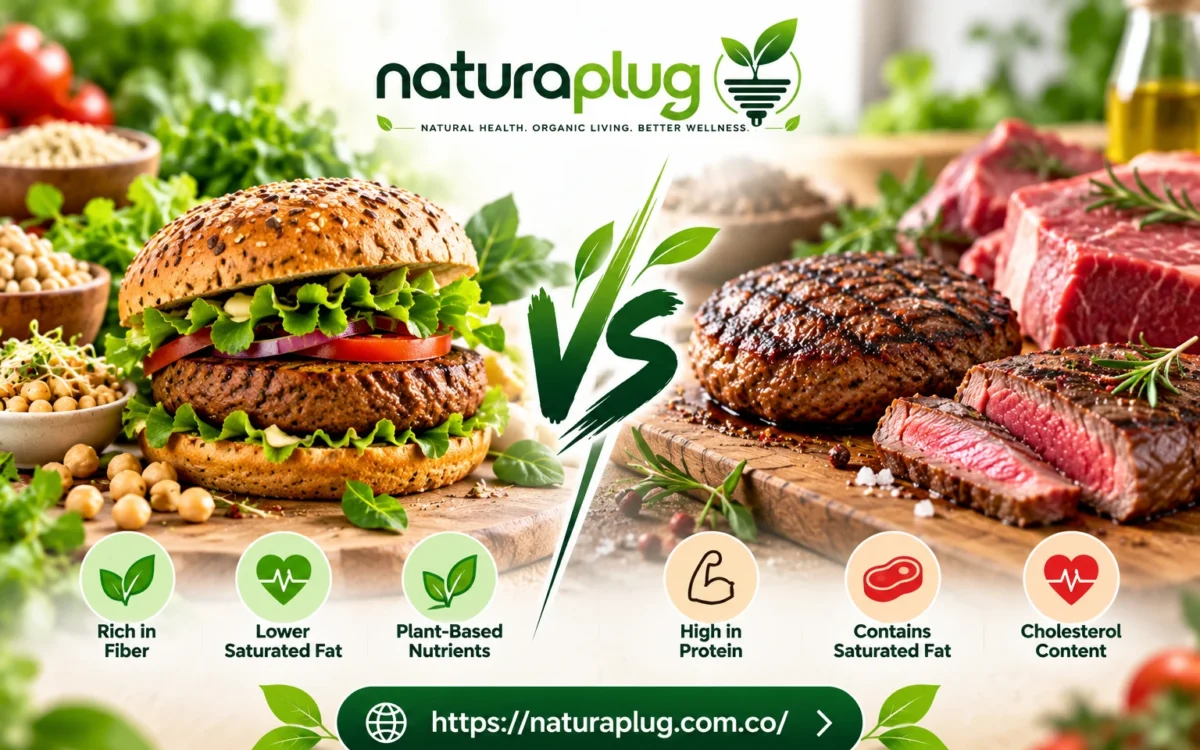

Is plant-based meat healthier than real meat? The answer depends on the product being compared and the rest of the diet. Many plant-based meat alternatives contain less saturated fat and more fiber than meat, but some are high in sodium and may provide less protein or certain nutrients than meat. A lean, minimally processed meat can be a nutritious choice, while a highly processed plant-based burger may not always be the better option.
At a Glance
- Plant-based meat can be a healthier replacement for some higher-fat or processed meats.
- Many plant-based meat products contain more fiber and less saturated fat than comparable meat products.
- Sodium can be a major drawback in some plant-based alternatives.
- Protein content varies by product and may be somewhat lower than meat.
- Meat provides nutrients such as vitamin B12, zinc and highly bioavailable iron.
- Fortified plant-based products can provide some of these nutrients, but the amounts vary.
- Beans, lentils, tofu, tempeh, nuts and seeds are less processed plant protein choices.
- The healthiest choice depends on the full nutritional profile, portion, preparation and overall eating pattern.
What Is Plant-Based Meat?
Plant-based meat refers to foods made primarily from plant ingredients that are intended to resemble conventional meat in taste, texture or cooking behavior. Common ingredients include soy protein, pea protein, wheat protein, beans, oils, starches, vegetables and various seasonings.
These products can come in many forms, including burgers, sausages, meatballs, nuggets and ground-meat alternatives. Their nutritional profiles can be very different, so the term “plant-based” does not automatically mean a product is low in sodium, calories, saturated fat or added ingredients.
This distinction matters because a plant-based burger made from legumes and vegetables is quite different nutritionally from a highly formulated meat substitute. The ingredient list and Nutrition Facts panel give a much clearer picture than the front of the package.
Is Plant-Based Meat Healthier Than Meat?
For some people and some meals, yes. But there is no universal rule that plant-based meat is healthier than real meat.
Research comparing meat alternatives with meat has found that plant-based alternatives often have lower saturated fat and can provide fiber, while their sodium and protein levels vary considerably. One 2024 analysis of 118 plant-based meat alternatives found lower saturated fat but substantially higher average sodium than beef, along with somewhat less protein.
A separate systematic review of human intervention studies found that replacing meat with plant-based meat alternatives may affect some health markers, but the evidence is still limited and studies have produced mixed results for several outcomes. More long-term research is needed.
So the better question is often:
What is the plant-based product replacing, and what does the product contain?
Replacing processed meat with a well-formulated plant-based alternative can be a useful dietary change. Replacing a lean, minimally processed food with a product high in sodium and saturated fat may offer less nutritional benefit.
Plant-Based Meat vs Real Meat: Nutrition Comparison
The differences become easier to see when the main nutrients are considered separately.
| Nutrient | Plant-Based Meat | Meat |
|---|---|---|
| Protein | Usually moderate to high, depending on product | Usually high |
| Saturated fat | Often lower, but varies | Varies by cut; higher in fatty meats |
| Fiber | Often present | Naturally very low or absent |
| Sodium | Can be high | Fresh meat is usually lower; processed meat can be high |
| Vitamin B12 | Often absent unless fortified | Naturally present |
| Iron | Present in some products | Present, with meat generally providing highly absorbable forms |
| Zinc | Varies by product | Commonly present |
| Ingredients | Can contain many added ingredients | Fresh meat may have a short ingredient list |
| Cholesterol | Usually contains no dietary cholesterol | Animal meat contains cholesterol |
The comparison changes substantially depending on whether the meat is fresh chicken, lean beef, bacon, sausage or another processed product. The same is true for plant-based products.
1. Saturated Fat
Saturated fat is one area where many plant-based meat products can have an advantage.
Some red meats and processed meats can contribute significant amounts of saturated fat. The American Heart Association recommends limiting saturated fat and replacing some meat with plant protein sources such as beans, lentils and nuts.
However, not every plant-based burger is low in saturated fat. Coconut oil and other tropical oils can contribute saturated fat, so checking the nutrition label remains useful.
For someone comparing a higher-fat beef burger with a plant-based burger that contains considerably less saturated fat, the plant-based option may be a better choice from a saturated-fat perspective.
2. Protein
Both meat and plant-based meat can provide protein, but the amount and quality differ.
Meat generally provides complete protein with all essential amino acids in readily available forms. Plant-based meat can also provide substantial protein, especially products made from soy or pea protein, but amounts vary by brand and serving size.
A 2024 analysis found average protein content of about 17 grams per 100 grams in the plant-based meat alternatives studied, compared with about 20 grams for beef and pork.
For everyday meals, protein does not have to come from a burger or meat substitute. Beans, lentils, tofu, tempeh, peas, nuts, seeds and other plant foods can contribute protein as part of a varied diet.
3. Fiber
Fiber is one of the clearest nutritional differences.
Unprocessed meat does not naturally provide dietary fiber, while many plant-based products contain some fiber because their ingredients come from plants.
A recent review found that many plant-based meat alternatives provided more fiber than meat and poultry, although the amount differed greatly between product categories.
Fiber supports normal digestive function and is commonly found in foods such as beans, lentils, whole grains, vegetables, fruits, nuts and seeds.
Still, a plant-based burger should not automatically be considered a high-fiber food. Some products contain very little, so the nutrition label is worth checking.
4. Sodium
Sodium is one of the biggest reasons a plant-based meat product may not be healthier than expected.
Manufacturers often use salt and other ingredients to create the savory flavor associated with meat. As a result, some meat alternatives contain a considerable amount of sodium.
A 2024 comparison of 118 plant-based meat alternatives found mean sodium of about 660 mg per 100 grams, compared with about 60 mg per 100 grams for beef in that dataset.
That does not mean every plant-based product is high in sodium. It means consumers should compare labels rather than assume that “plant-based” means low sodium.
5. Vitamin B12
Vitamin B12 deserves attention because it occurs naturally in animal foods and is not naturally present in most unfortified plant foods.
Some plant-based meat products are fortified with B12, while others are not. The amount can vary considerably between brands.
A plant-based diet can provide adequate nutrition, but people who eat little or no animal food need to pay attention to reliable sources of nutrients such as B12. For teenagers, major dietary changes or supplement use should be discussed with a parent or guardian and a qualified healthcare professional.
6. Iron and Zinc
Meat is a source of iron and zinc. Plant-based meat can also contain these minerals, particularly when products are fortified.
The form of iron differs, though. Iron from plant foods is generally less readily absorbed than heme iron from animal foods.
This does not mean plant foods cannot provide enough iron. A varied diet containing legumes, grains, seeds, vegetables and fortified foods can contribute meaningful amounts.
The key point is that nutrition varies from one plant-based product to another, so the label matters.
What About Processed Meat?
The comparison becomes more interesting when plant-based meat is compared with processed meat rather than fresh meat.
Processed meats include foods such as bacon, ham, hot dogs and certain sausages. Health authorities generally recommend limiting processed meat as part of a healthy dietary pattern. The Dietary Guidelines have also highlighted associations between lower intake of meat and processed meat and reduced cardiovascular disease risk in adults.
For someone who regularly eats processed meat, replacing some of those foods with beans, lentils, tofu or a suitable plant-based alternative may be a useful dietary change.
A plant-based alternative does not need to perfectly imitate meat to be useful. A simple lentil burger or bean-based meal can provide a less processed option.
Is Fresh Meat Always Healthier Than Plant-Based Meat?
No.
Fresh meat can be nutritious and provide protein, B12, iron and zinc. Lean cuts of meat can also fit into a balanced eating pattern.
At the same time, some plant-based alternatives can offer useful nutritional features, such as lower saturated fat and added fiber.
The bigger difference often comes from the type of food being compared:
Lean, minimally processed meat vs. highly processed plant-based meat: the nutritional advantage may be less obvious.
Processed meat vs. a well-formulated plant-based alternative: the plant-based option may have some advantages.
Plant-based burger vs. beans or lentils: the minimally processed plant food will often provide a simpler nutritional profile.
Are Plant-Based Meat Alternatives Highly Processed?
Many are.
Processing itself does not automatically make a food unhealthy. Some processing helps make foods safe, convenient or easier to prepare.
However, some meat alternatives contain a long list of ingredients, including protein isolates, oils, starches, flavorings, stabilizers and added salt.
That does not make them “bad.” It simply means they should be viewed as convenient food products rather than automatically equated with whole plant foods.
The American Heart Association recommends choosing packaged plant-based foods that are lower in sodium, added sugars and saturated fat.
How to Choose a Healthier Plant-Based Meat
Instead of focusing only on whether a product says “plant-based,” consumers can check several parts of the label.
Look for:
- A useful amount of protein per serving
- Some dietary fiber
- Lower saturated fat
- Moderate sodium
- Limited added sugar
- Fortification with nutrients such as B12 and iron when relevant
- An ingredient list that fits the person’s dietary preferences
- A serving size that matches the actual portion being eaten
There is no single perfect number for every product or person. The goal is to compare similar foods and select an option that fits the rest of the meal.
Plant-Based Meat vs. Beans, Lentils and Tofu
If health is the main priority, plant-based meat does not have to be the first plant protein choice.
Beans, lentils, chickpeas, tofu and tempeh can provide protein while also fitting naturally into meals based around vegetables, grains and other minimally processed foods.
For example:
- Lentils can be used in tacos or bowls.
- Chickpeas can replace meat in wraps and salads.
- Tofu can work in stir-fries.
- Tempeh can be added to sandwiches.
- Beans can be used in chili, soups and burgers.
These foods can also make meals less dependent on highly formulated meat substitutes.
What Is Better for Heart Health?
A plant-forward eating pattern can support heart health, especially when plant foods replace foods high in saturated fat and processed meat.
The American Heart Association recommends emphasizing vegetables, fruits, whole grains, legumes, nuts and plant-based protein while limiting saturated fat, salt and highly processed foods.
This does not mean every meal has to be vegan or that meat must be completely removed.
For many people, a practical approach is to eat more beans, lentils, vegetables, whole grains, nuts and seeds while choosing lean, minimally processed meat when they want it.
Common Mistakes When Choosing Plant-Based Meat
Assuming plant-based means healthy
A plant-based label does not tell the full nutritional story. Sodium, saturated fat, protein and fiber can differ greatly between products.
Ignoring the serving size
Eating two servings can double the sodium, calories and saturated fat listed on the label.
Focusing only on protein
Protein matters, but fiber, sodium, saturated fat and micronutrients also deserve attention.
Treating every meat substitute the same
A soy-based burger, lentil patty and highly formulated sausage can have very different nutritional profiles.
Forgetting the rest of the meal
A plant-based burger served with vegetables and a whole-grain side is different from the same burger served with a large portion of salty processed foods.
Is Plant-Based Meat Good for Teenagers?
Plant-based meat can be part of a balanced diet for teenagers, but growing teens need enough overall energy, protein and essential nutrients.
There is no need to rely heavily on meat substitutes. Regular foods such as beans, lentils, tofu, whole grains, vegetables, fruits, nuts and seeds can provide a broad range of nutrients.
Teenagers who are considering becoming vegetarian or vegan should involve a parent or guardian and a pediatrician or registered dietitian. This is especially useful for planning nutrients such as iron, B12, calcium, vitamin D and protein.
Frequently Asked Questions
Is plant-based meat healthier than beef?
It can be, depending on the products being compared. Many plant-based meat alternatives contain less saturated fat and more fiber than meat, but some contain considerably more sodium and somewhat less protein.
Is plant-based meat healthier than chicken?
Not automatically. Lean chicken can provide substantial protein with relatively little saturated fat. Some plant-based products may offer more fiber, but sodium and protein amounts vary.
Is plant-based meat healthier than processed meat?
It can be a better choice in some cases, particularly if the plant-based product has less saturated fat and is lower in sodium. Whole plant foods such as beans and lentils are another strong option.
Does plant-based meat have protein?
Yes. Many products contain protein from soy, peas, wheat or other plant sources. The amount varies by product, so checking the label is useful.
Does plant-based meat contain cholesterol?
Most plant-based meat products do not contain dietary cholesterol because they do not contain animal ingredients. However, other parts of the meal can contribute cholesterol.
Is plant-based meat considered healthy food?
It can fit into a healthy eating pattern, but “plant-based” alone does not guarantee good nutrition. Products should be evaluated for protein, fiber, saturated fat, sodium and added ingredients.
Should someone replace all meat with plant-based meat?
There is no need to make an all-or-nothing change. A person can include a mixture of beans, lentils, tofu, nuts, seeds, vegetables, whole grains and suitable meat or meat alternatives.
Final Takeaway
So, is plant-based meat healthier than real meat? Sometimes, but not automatically.
Plant-based meat can offer less saturated fat and more fiber than some meat products, while meat can provide highly absorbable protein, B12, iron and zinc. Some plant-based alternatives can also be high in sodium and may contain less protein than the meat they replace.
For everyday health, the strongest approach is to look beyond the label. Beans, lentils, tofu, tempeh, vegetables, fruits, whole grains, nuts and seeds can form the foundation of a plant-forward eating pattern, while lean and minimally processed animal foods can also fit into a balanced diet.
The best choice is the one that provides useful nutrition, fits the person’s dietary needs and works well as part of the overall eating pattern.
Disclaimer
This article is for general educational purposes and is not a substitute for medical or nutrition advice. Nutritional needs vary by age, health status, activity level and dietary pattern. Teenagers making major dietary changes should discuss their choices with a parent or guardian and a qualified healthcare professional. NaturaPlug does not recommend using plant-based meat as a replacement for a varied and balanced diet.