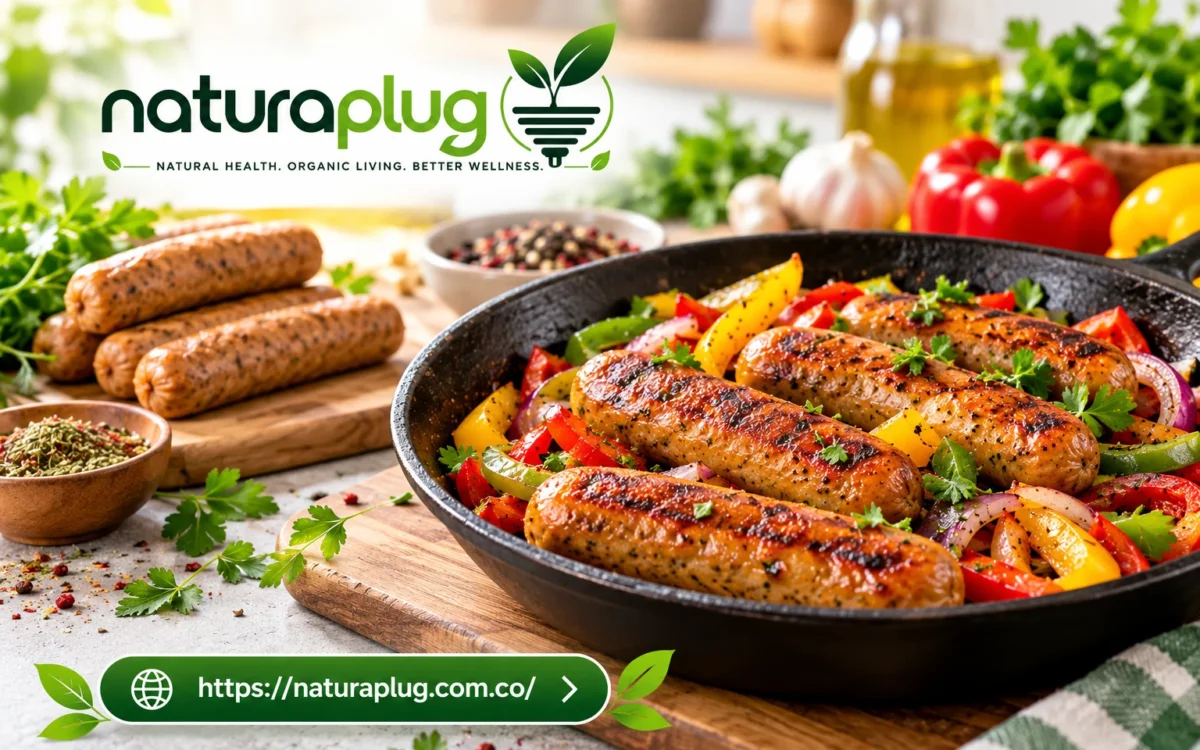

Plant-based sausage can be cooked in much the same way as traditional sausage, but the exact method depends on whether it comes as links, patties, crumbles, or a frozen product. The most reliable approach is to follow the package instructions first, then use a skillet, oven, or grill to develop a browned exterior without drying it out. Different brands have different cooking times, so there is no single cooking time that applies to every product.
At a glance
- Best everyday method: Skillet
- For several servings: Oven
- For browned, smoky flavor: Grill
- For ground plant sausage: Skillet
- Frozen products: Check the package before thawing
- Main goal: Heat thoroughly while avoiding overcooking
- Typical cooking time: About 5–16 minutes, depending on the product and method
What Is Plant-Based Sausage?
Plant-based sausage is made from ingredients such as soy, pea protein, wheat protein, vegetables, grains, oils, herbs, and spices. Many products are formulated to imitate the texture and flavor of pork or other conventional sausages, while others are simply seasoned vegetable or grain-based sausages.
The cooking behavior can vary considerably. Some plant-based sausages are sold frozen and intended to go directly into a pan, while refrigerated products may need to be cooked after opening. Some are pre-formed links or patties, while others come as ground sausage that can be crumbled into pasta, breakfast dishes, pizza, stuffing, or vegetable sautés.
For that reason, the package directions should take priority over generic cooking instructions.
How to Cook Plant-Based Sausage in a Skillet
A skillet is usually the easiest option because it gives the sausage direct contact with the hot surface. This helps create a browned outside while keeping the center moist.
For plant-based sausage links
- Heat a nonstick skillet over medium to medium-high heat.
- Add a small amount of cooking oil if the product or pan requires it.
- Place the sausage links in the skillet.
- Turn them regularly so several sides brown evenly.
- Cook until heated through and browned.
- Remove from the heat and allow them to rest briefly before serving.
For example, Beyond Sausage recommends cooking its links in a skillet for about 12–13 minutes, turning them roughly every 1–2 minutes. Impossible Foods recommends around 10–12 minutes for its sausage links in a medium-heat skillet.
Those times are product-specific, so they should not be treated as a universal rule.
For plant-based sausage patties
Patties generally cook faster because they are thinner and have more surface area exposed to the pan.
Heat the skillet, add the patties, and cook them until both sides are browned and the center is hot. Some frozen breakfast sausage patties can be cooked directly from frozen. Beyond, for example, gives approximately 4–5 minutes total on a skillet for its breakfast patties.
How to Cook Plant-Based Sausage in the Oven
The oven works well when several sausages need to be prepared at once.
Basic oven method
- Preheat the oven according to the package directions.
- Line a baking sheet with parchment paper or foil if desired.
- Arrange the sausages in a single layer.
- Leave some space between each piece.
- Bake according to the manufacturer’s instructions.
- Turn halfway through if the package recommends it.
- Remove when thoroughly heated and browned.
For example, Impossible Foods recommends baking its sausage links at 375°F for about 16 minutes, turning them halfway through. Beyond gives different instructions for different sausage products; its breakfast sausage links are cooked at 350°F for about 13–14 minutes.
This difference shows why checking the product label matters.
How to Grill Plant-Based Sausage
Grilling gives plant-based sausage a browned exterior and a smoky flavor.
Preheat the grill and use moderate heat for products that are prone to splitting or burning. Place the sausages on the grill and turn them regularly. Impossible Foods recommends about 8–10 minutes for its sausage links over moderate direct heat, with turning approximately every two minutes.
Beyond’s instructions for its Mild Italian Sausage call for a preheated covered grill at 500°F and about 10 minutes of cooking, with the sausages turned halfway through.
The difference between these instructions is another reason to use the manufacturer’s directions as the primary guide.
How to Cook Plant-Based Sausage Crumbles
Ground plant-based sausage is particularly easy to use in recipes.
Basic method
- Heat a skillet over medium heat.
- Add a small amount of oil if needed.
- Add the plant-based sausage.
- Break it into smaller pieces with a spatula.
- Cook until browned and heated through.
- Add vegetables, sauce, grains, pasta, or other ingredients as needed.
Impossible Foods recommends cooking its ground sausage on a medium skillet for approximately 2–3 minutes while breaking it apart with a spatula.
Ground sausage can then be added to breakfast scrambles, pasta sauces, tacos, pizza toppings, stuffed vegetables, soups, or grain bowls.
Can Plant-Based Sausage Be Cooked From Frozen?
Sometimes.
Some products are specifically made to be cooked from frozen. Beyond Breakfast Sausage, for example, is intended to be cooked from frozen and does not need to be thawed first.
Other products have different storage and preparation requirements. Beyond’s refrigerated sausage links, for example, have different instructions and may need refrigeration and thawing if purchased frozen.
The simple rule: check whether the package says “cook from frozen” before putting a frozen sausage into the pan.
Should Plant-Based Sausage Be Thawed First?
There is no universal answer.
Some frozen plant-based sausages cook well directly from frozen, while other products recommend thawing in the refrigerator first. Thawing a product that was intended to be cooked from frozen can change the cooking time and texture.
The product’s storage and cooking directions should therefore take priority over a general recipe.
How to Stop Plant-Based Sausage From Drying Out
Overcooking is one of the easiest ways to ruin plant-based sausage. Because many products are already formulated with oils and other ingredients that contribute to their texture, excessive heat can make the outside tough or dry.
A few practical techniques help:
- Use medium or medium-high heat instead of extremely high heat.
- Turn links regularly.
- Avoid leaving one side against the pan for too long.
- Use only enough oil to prevent sticking.
- Follow the recommended cooking time.
- Remove the sausage once it reaches the product’s recommended level of doneness.
- Avoid reheating the same sausage repeatedly.
If the sausage browns very quickly while the center remains cold, the heat is probably too high.
How to Make Plant-Based Sausage Taste Better
Plant-based sausage is already seasoned in most cases, so it does not require a complicated marinade.
Simple additions can make a meal more interesting:
For breakfast
Serve sausage with:
- Scrambled eggs or tofu
- Whole-grain toast
- Potatoes
- Tomatoes
- Avocado
- Sautéed spinach
For lunch or dinner
Try it with:
- Roasted vegetables
- Rice or quinoa
- Pasta and tomato sauce
- Peppers and onions
- Beans
- Salad
- Whole-grain bread
For a quick sausage bowl
Slice cooked sausage and combine it with roasted potatoes, sautéed peppers, leafy greens, and a simple sauce. This works particularly well for leftovers because the ingredients can be reheated together.
Skillet vs. Oven vs. Grill
| Cooking method | Best for | Main advantage | Watch out for |
|---|---|---|---|
| Skillet | Links, patties, crumbles | Fast browning | Can burn if heat is too high |
| Oven | Several servings | Even cooking | Can dry out if overcooked |
| Grill | Links | Smoky, charred flavor | Sausage can split or burn |
| Air fryer | Some frozen products | Quick and convenient | Product instructions vary |
An air fryer can work for some plant-based sausage products, but it should not automatically be treated as the best method for every brand. Impossible Foods, for example, provides air-fryer instructions for certain frozen sausage patties.
Common Mistakes to Avoid
Cooking every brand for the same amount of time
This is a common mistake. Plant-based sausages differ in size, ingredients, moisture content, casing, and whether they are frozen or refrigerated.
Using extremely high heat
High heat may brown the outside before the inside is properly heated.
Assuming plant-based means ready to eat
Plant-based does not automatically mean that a product should be eaten straight from the package. USDA research notes that plant-based meat alternatives still need appropriate food-safety handling, and some products should be treated as foods requiring cooking.
Ignoring the package
The manufacturer’s instructions are the most relevant source for that particular product.
Overcooking
More cooking is not always better. Once the sausage has reached the recommended temperature and texture, additional cooking can make it dry.
Does Plant-Based Sausage Need a Specific Internal Temperature?
There is an important distinction here.
USDA’s standard minimum temperatures of 160°F for ground beef, pork, lamb and veal and 165°F for poultry apply to those animal products. Ask FSIS They should not automatically be presented as universal legal or safety temperatures for every plant-based sausage.
Instead, the temperature printed in the manufacturer’s cooking directions should be followed. Several commercial plant-based sausage products currently recommend 165°F; Beyond gives that instruction for several of its sausage products.
A food thermometer can be useful when the manufacturer provides an internal-temperature target.
Is Plant-Based Sausage Healthy?
“Plant-based” does not automatically mean that a product is nutritionally superior.
Some plant-based sausages provide useful amounts of protein and may contain no dietary cholesterol, while others can be relatively high in sodium or saturated fat. The nutrition label gives a much better picture than the front-of-package marketing.
For example, one current Beyond Breakfast Sausage product lists 9 grams of protein and 240 mg of sodium per serving.
For a balanced meal, plant-based sausage can be paired with vegetables, whole grains, beans, fruit, or other minimally processed foods rather than being treated as the entire meal.
How to Store Leftover Plant-Based Sausage
Storage instructions depend on the product.
Refrigerated products should generally be kept cold and handled according to the package instructions. Opened products may have a shorter recommended storage period than unopened products.
Food safety also matters after cooking. USDA recommends prompt refrigeration and keeping a refrigerator at 40°F or below.
If there is any uncertainty about how long a particular product can be stored, the package’s storage instructions should take priority.
Easy Ways to Use Cooked Plant-Based Sausage
Once cooked, plant-based sausage can be used in many simple meals:
- Breakfast sandwich: sausage patty, egg or tofu, tomato, and whole-grain bread.
- Pasta: browned sausage crumbles with tomato sauce and vegetables.
- Sheet-pan meal: sliced sausage with potatoes, onions, and peppers.
- Grain bowl: sausage, rice or quinoa, greens, and roasted vegetables.
- Pizza: browned sausage crumbles with vegetables and cheese or a plant-based cheese.
- Stuffed peppers: sausage crumbles mixed with grains, vegetables, and herbs.
- Breakfast hash: diced potatoes, sausage, onions, and peppers.
For internal linking on NaturaPlug, relevant recipe, nutrition, plant-based food, meal-planning, and healthy-eating articles would fit naturally. For example, a section discussing balanced meals could link to a future or existing plant-based protein article, while the sausage nutrition section could link to a plant-based foods nutrition guide. If those pages do not currently exist on NaturaPlug, creating them first would be better than forcing unrelated internal links.
Frequently Asked Questions
How long does plant-based sausage take to cook?
It depends on the product and cooking method. Current manufacturer instructions range from roughly 4–5 minutes for some breakfast patties to around 12–13 minutes for certain sausage links in a skillet.
Can plant-based sausage be eaten without cooking?
Not necessarily. Some products require cooking, while others may have different preparation instructions. The package should always be checked before eating the product without cooking.
Is it better to cook plant-based sausage in a pan or oven?
Both methods can work well. A skillet is useful when browning and speed are priorities, while an oven is convenient for cooking multiple portions at once.
Can plant-based sausage be grilled?
Yes. Many plant-based sausage links can be grilled. The heat level and cooking time vary by product, so the manufacturer’s instructions should be followed.
Can plant-based sausage be cooked from frozen?
Some can, while others should be thawed first. Beyond Breakfast Sausage, for example, is specifically intended to be cooked from frozen.
How can plant-based sausage be kept from becoming dry?
Moderate heat, regular turning, and avoiding unnecessary extra cooking are the simplest ways to protect the texture. Following the product’s cooking time is more reliable than cooking until the sausage becomes very dark.
Final Takeaway
Learning how to cook plant-based sausage is fairly simple once the product type is identified. A skillet is usually the most practical choice for links, patties, and crumbles, while an oven or grill can work well for larger batches or a particular texture.
The biggest mistake is treating every plant-based sausage as if it cooks exactly the same way. Frozen and refrigerated products can have different instructions, and even similar products from different brands may require different temperatures and cooking times. The package directions should therefore be the starting point, with general cooking methods used as a guide.
Disclaimer: This article is provided for general educational information and does not replace product-specific cooking instructions, professional nutrition advice, or food-safety guidance. Cooking and storage recommendations can vary by product. NaturaPlug recommends checking the manufacturer’s label and following appropriate food-safety practices before preparing or consuming plant-based sausage.